Taking Extreme Ownership of Your Team in 3 Steps
Want to lead like David Boreanaz in the CBS show SEAL Team? Keep reading!
After accepting a post-graduation leadership position at my high school, I was given the rather open-ended task of supporting a group of student activity leaders in a consultative capacity. Though I had general instructions to provide advice and guidance to the upcoming unit of leaders, the manner I went about that task and the “curricula” I used to see it through was largely up to me.
With one month to prepare for my upcoming duties, I scoured lists of leadership books, took in hours of seminars and podcasts, and reflected on my own experience to synthesize a set of tips for success that would prove useful for an already talented group of students.
My research pointed me in the direction of an excellent book made by exceptionally effective leaders: Extreme Ownership: How U.S. Navy SEALs Lead and Win, written by Task Unit Bruiser SEALs Jocko Willink and Leif Babin.
The 12-chapter battle-tested playbook on leadership highlights three imperatives to successful organizations: selflessness, clear communication, and decentralizing control.
Those principals were the foundation of what I communicated with those student leaders, and those same principals can work for your team as well.
Continue reading to discover three steps to leading like a Navy SEAL.
Step 1: Be Selfless
History is littered with leaders who allowed their egos to blind them and wrecked their success. Whether it’s General Custer’s shortsighted Last Stand or Napoleon’s inability to negotiate peace after defeat, allowing ego to obscure your judgment and focus will only result in petty squabbles and decisively poor decision-making.
The other trait of a selfless leader is the ability to take responsibility for all shortcomings of the group, ending the tumultuous cycle of blame that can ensnare any organization.
Taking the blame of a subordinate will certainly hurt one’s pride, but in addition to stopping the blame, it will also generate tremendous respect for that leader throughout the team.
Working as a former student activity leader myself, I learned the importance of accepting a loss in an argument and recognizing that even in my leadership position, I had plenty to work on and would be remiss in overestimating my capabilities or underestimating the task before me.
Step 2: Break Down Communication
While this step may seem obvious, communication continues to be one of the biggest and most consequential mistakes of any leader.
When complex or difficult situations arise, being able to prioritize and execute would be a decisive factor in the success of the most capable forces in the U.S. military. Often, there are too many problems that simultaneously plague businesses, and without prioritizing the most pertinent issues first and working down the list, businesses are bound to drown by their ineffectiveness.
Simpler plans are almost always better. After identifying the problem, it’s incumbent on leaders to create plans that are specific enough to have a defined outcome, but not so specific that the plan becomes nullified when things don’t go perfectly.
Extreme Ownership Author Jocko Willink goes on to share the importance of using simplistic language where possible to avoid uncertainty and the problems it may create. Establishing clear objectives and as simple a plan as possible will mitigate confusion and set your team up for focused fulfillment of your goals.
I’ve seen these principles play out firsthand; you can’t give a long and complicated task to 70 people and expect them to understand it. When working to make an entire group of students move the same way at the exact time, using fewer words, building on previous steps and allowing other student leaders to rework the movement as necessary. Enabling efficient communication and comprehension was only possible by breaking down the plan as much as possible.
Step 3: The Power of the Power Structure
If you’re the type that’s hyper-involved with your business’s processes and struggles to let others take on responsibility, then this step is tailor-made for you.
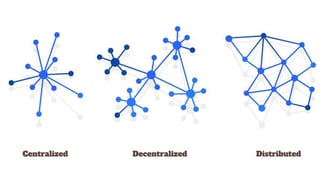
Leaders don’t have time to obsess over the inner workings of their business, which is why the most effective operations use a decentralized power structure to get things done.
Lower-level workers are certainly able to mindlessly execute orders from a superior, sure. However, breaking down the power structure and allowing workers to conquer their own obstacles gives their job meaning, and helps to bring the best out of each person. With fewer objectives to directly complete, leaders can then spend more time focusing on the overarching goal as opposed to micro-management.
Willink and Babin go on to say that communication between workers and their bosses is essential for maintaining accountability within a decentralized system, and leaders must be ready to discard their ego and their desire to control so that the system can be broken down.
Indeed, if the system does break down, it falls on the leader to land on that grenade and take blame for the failure.
Harnessing the power of the power structure is an effective way of bringing out the best in your workers. As you might’ve noticed, implementing this system requires the two previous tips from this post– both iron-clad communication and a selfless leader.
I discovered early on that creating lasting change in an organization rarely happens on your own; it took the support and leadership of the other student leaders that I worked with, the band directors, and the summer staff to implement higher standards throughout the student leadership team and in the band.
Now You’re SEAL Team Ready!
A leader’s role is never an easy one; it takes tremendous fortitude, discipline, and passion to lead an organization effectively. The important thing to remember is that you’re not alone and that there are a number of tremendous leaders who struggled, overcame, and are happy to lend an ear or a hand.
Extreme Ownership is a fantastic resource that I’d recommend to anyone, and for those who want even more great leadership tips and remarkable war stories, the book can be purchased here.